
Recently, we had our first encounter with a customer using four OFDM blocks in the channel line up with a 1.2 GHz extended spectrum DOCSIS (ESD) plant. This is a natural evolution of network expansion from the legacy plant, which typically supports two OFDM blocks. To properly prepare the plant for service, this service provider had approved our CX380C and SWP-BOX Sweep system.
With this customer’s case in mind, we made several improvements to the VeCheck scan--a “one-button test” Full Band Scan for the Forward Path that verifies QAM, Single-carrier DOCSIS QAM, and D3.1 OFDM--to properly detect all four OFDM blocks, as shown below.
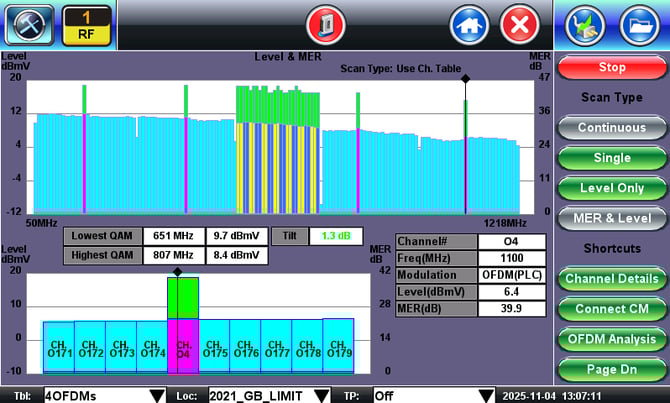
To refresh your memory:
- Each OFDM block is comprised of multiple subcarriers, shown in light blue and the PLC, shown in magenta.
- In this example, sandwiched in the middle are DOCSIS channels (primary blue and secondary yellow).
VeCheck is a very important feature for CX380C Sweep as its “Build Profile” configuration is based on VeCheck. “Build Profile” is a significant time saver, using the auto-discovery of active plant channels to generate the Sweep profile.
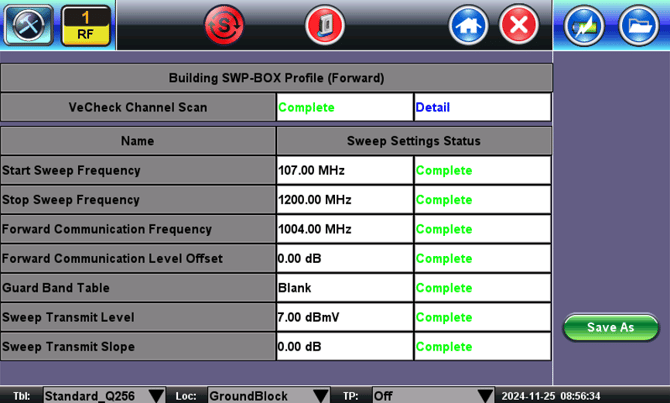 Figure 1. SWP-BOX Build Profile
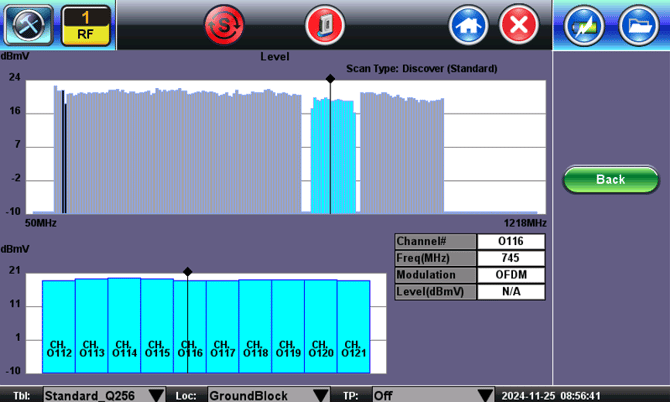 Figure 2. SWP-BOX Build Profile, based on VeCheck Channel Scan
- Sweep tones are automatically inserted at levels well below DOCSIS and QAM channels, to be truly non-interfering with service.
- For an OFDM block, there is no space to insert a sweep tone. Therefore, OFDM power levels are measured and included in a combined sweep.
- The resultant sweep trace typically shows OFDM as a “hump”, due to the power difference between the active OFDM block and low-level sweep tones.
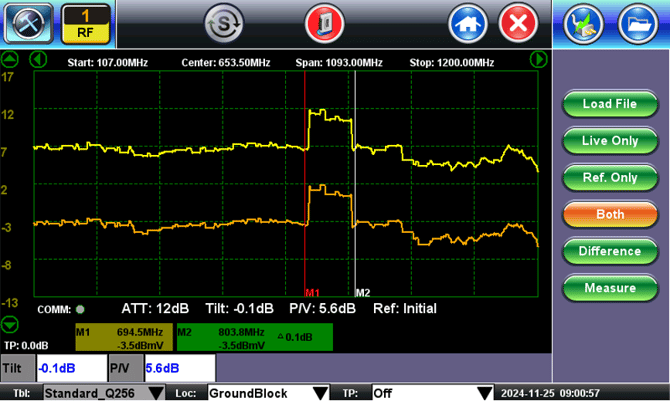 Figure 3. Reference Trace and Live Trace with OFDM "Hump"
- Despite the OFDM “hump’, with no cable faults, the Sweep Delta between the initial reference trace and current live trace yields a flat response, with a low Peak-to-Valley (P/V) value, as shown below.
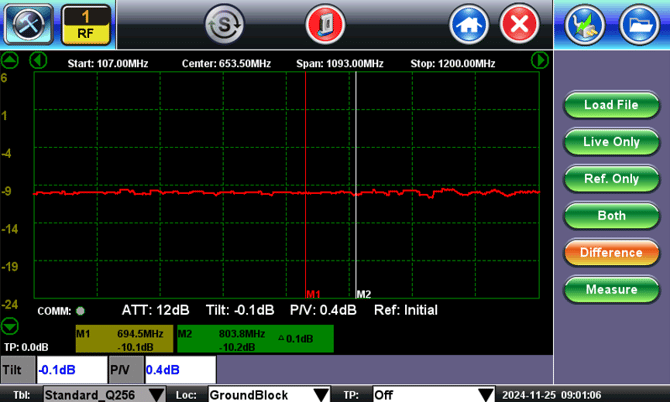 Figure 4. Referenced Sweep with Passing P/V Value
The Power of Sweep for Customers Expanding Their Network
Below is an example of the CX380C and SWP-BOX in action. While sweeping in the uncharted > 1 GHz spectrum, a hidden fault is discovered. Note the prominent dip in the referenced trace, the source of which is a bad splice block.
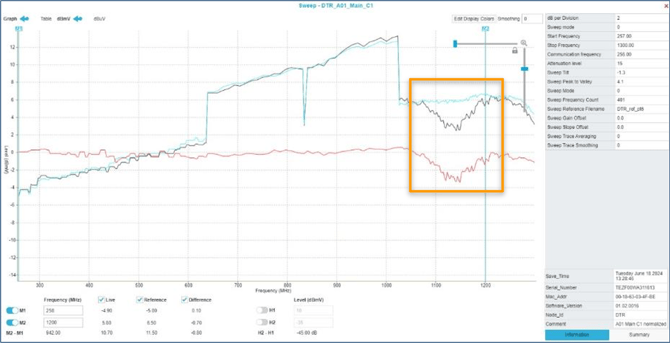 Figure 5. Forward Sweep Trace Showing Fault at 1150 MHz, at an Output Amp
Once the faulty device is replaced, the dip in the trace is gone.
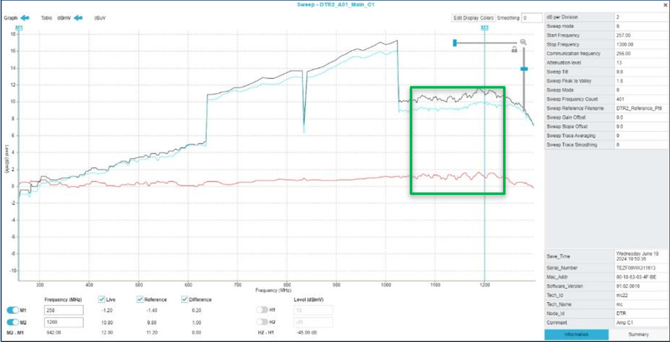 Figure 6. Clean Forward Sweep Trace After Resolving Cable Fault
Without sweeping, this plant fault would not have been detected and would have impaired any OFDM carriers placed in the 1 to 1.2 GHz frequency region.
For more details on how the CX380C's OFDM Analyzer and Enhanced VeCheck scan are used to test HFC cable plants with multiple OFDMs, watch this video.
Related Information & Reference Materials
- Extended Spectrum DOCSIS (ESD), Mid-Split & High Split
- DOCSIS 4.0 Technology Poster
- Getting Ready for DOCSIS 4.0 & ESD (recorded webinar)
- Useful Features for Validating OFDMA in DOCSIS Systems